Check Your Sources
A humbling moment for yours truly.

Recently I shared something online that was attributed to C.S. Lewis. It read like, sounded like, felt like a Lewisism, but alas it was not actually a direct quote.
I was humbled and reminded of something I have often challenged others to do: CHECK YOUR SOURCES.
In the age of information, it matters where the information comes from.
The Boring Part is the Important Part
Having studied journalism this was drilled into me constantly - you must verify your sources before you share the material. My wife Amy has bachelor degrees in history and law, both disciplines enforce stringent reference checks. And the last few years as she’s gone back to theological study through Laidlaw College, I’ve watched her painstakingly go over the footnotes and referencing for every assignment & to be honest I’ve been kinda proud, “Yeah, that’s right. We are thorough. We check before we send. We know the source of the information we share.”
Yet this week I did not.
I had seen this “quote” in a variety of places & because it resembled what I know to be C.S. Lewis type of thought, I was happy to pass it on under the assumption that it was accurately attributed. I’m thankful a couple of well-mannered and well-meaning friends pointed out my error (with grace, by the way, which is how correction should be delivered).
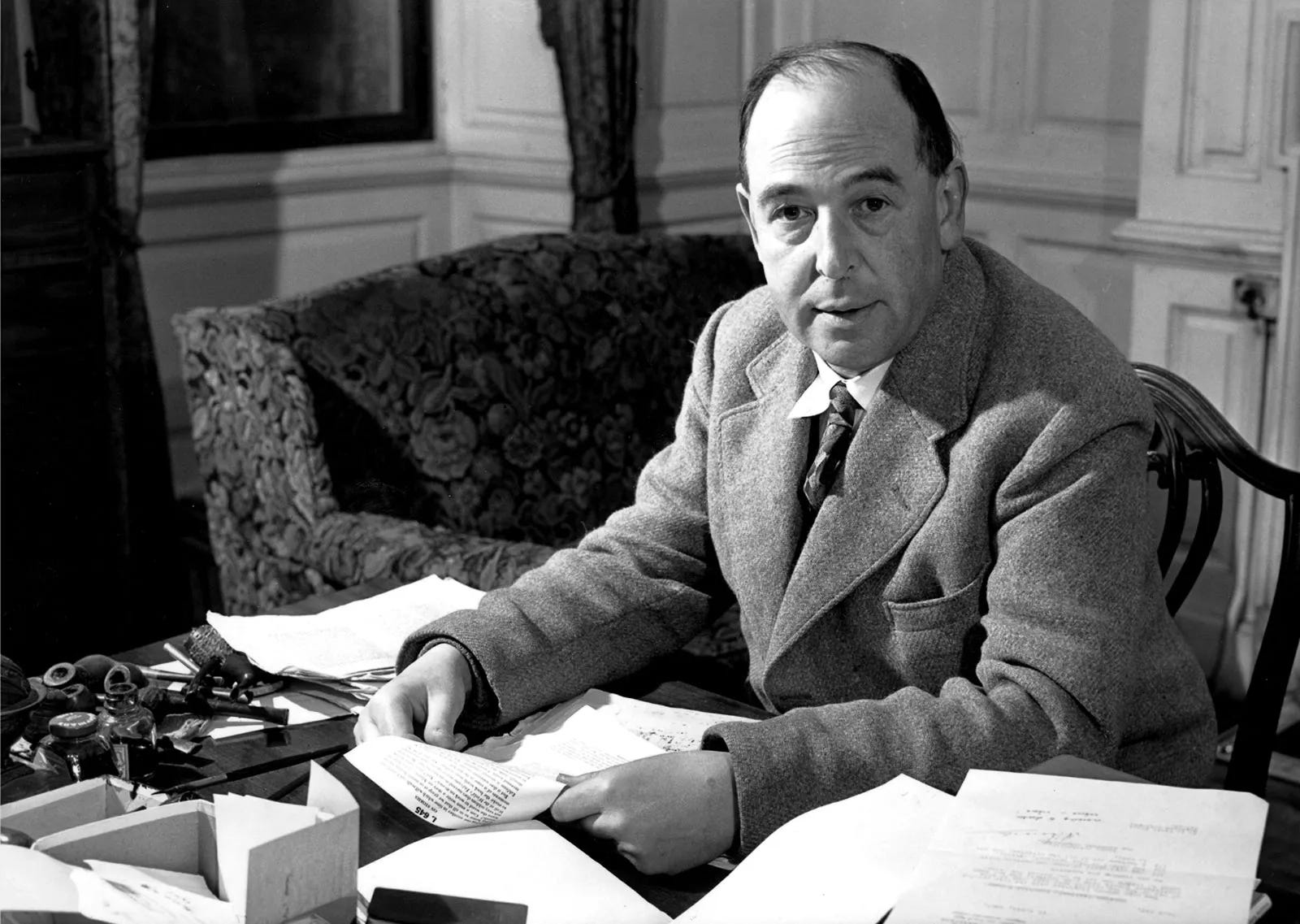
C.S Lewis. Image source: britannica.com
This was not the first time this year I discovered something I had been led to believe was from a reputable source, actually was not…
Billy Graham and the TV Interview that wasn’t…
Recently, Amy had been doing an assignment on evangelicalism and part of the research had her diving deep into the teaching and impact of Billy Graham. She was also doing a lot of preparation for our preaching team on the topic of biblical marriage, of which Billy Graham has some great material.
However, we discovered that a whole interaction that Billy Graham supposedly had with a journalist about divorce and marriage and love, actually never happened!
His family even acknowledged that the story had taken on a life of its own, but somewhere along the way had been fabricated and embellished and then shared as truth. Amy and I had heard that story shared, preached, retold numerous times - because no one ever thought, “I had better just check”, it was being regurgitated around the world as though fact.

Parables, Plagiarism and Preachers’ Exaggeration
I have always been a little pious about these things. It would frustrate me when I would hear a preacher throw out a one-liner that I knew came from a book or another preacher - my thought was, it doesn’t diminish you by acknowledging the source of the thought, it highlights your study and your integrity. In fact, in other arenas this would amount to plagiarism and be very… frowned upon.
I also acknowledge there’s a place for parables and for hyperbole, both are powerful communication tools. To tell a story, a fable, with a purpose of teaching a moral doesn’t always require stating when that story was first told, but it is a reasonable expectation to frame things correctly. “There’s an old story that goes…”
All of this provides context to this week’s errant post.
Why I wanted it to be C.S. Lewis
This experience has made me reflect.
Why did I drop my guard on this one?
Why was I willing to make that assumption?
Why did I believe this at face value when I would usually at least give a cursory assessment of its validity?
Whilst I may want to blame it on post-surgery anaesthetic blurring my judgement, that wouldn’t be true.
The answer is because of my unconscious bias.
I wanted to believe it was Lewis. The quote articulated my thoughts better than I could and it gave those thoughts weight and credence if it was from some as esteemed as Clive Staples himself.
And therein lies the rub.
We want to be right, more than we want to learn what is right.
We live in echo chambers. We are fed what the algorithm thinks we want to see/read/watch. We want to believe what we already believe. We want to be convincing to others.
And in the process we lose the ability to analyse, consider and THINK.
We lose our ability to LEARN.
Paul’s letters to the Ephesians and the Thessalonians urge us to consider, to analyse, to test things & weigh them up.
Unfortunately too many of us are doing zero testing and copious sharing.
We want to be right, more than we want to learn what is right.
WHY DOES THIS MATTER?
“Look carefully then how you walk, not as unwise but as wise, making the best use of the time, because the days are evil.” - Ephesians 5:15-16 ESV
We are in tense, tumultuous and urgent times.
But in the midst of urgency, pressure and tension we need wisdom and calmness in order to make the most of the days available to us.
Developing a habit of checking your sources is not just pertinent when deciding whether or not to share a quote or clip, it’s a healthy habit to develop for your own maturing.
This is how we learn. This is how we grow.
Anyone who knows me will know I am not a cynical person, I’m a perpetual optimist - sometimes to a fault - but I have learned the importance of pausing, analysing, and checking sources of information that I’m consuming in order to discern their weight.
In order to discern whether something is truth, we have to at least be able to understand where that information came from.
Remember, this isn’t just about sharing a reel or including a quote in a sermon, this is about knowing the source of what you’re consuming and therefore what is forming you.
My encouragement to everyone reading this: when you watch a video or read a quote, ask these critical questions:
Did I get the full context in this, or was it just a snippet?
Who is the creator of this content and what is their overall goal? (Every piece of media we co sure has an angle, that’s not bad, it’s just fact)
Did they actually say this/write this? What is the original source?
Am I familiar with any other material from this source and does what I’ve read/watched here correlate with what I know from their body of work?
Bless.
BK